How Ventilation Shapes Temperature Perception Indoors
A room can read exactly the right temperature on a thermostat and still feel oppressively warm, stuffy or difficult to cool. If you have ever stood in a space that is allegedly air conditioned and wondered why it still feels uncomfortable, the answer is almost always ventilation — or the lack of it. Understanding how airflow shapes temperature perception explains why some buildings feel comfortable without mechanical cooling, and why others feel uncomfortable despite significant energy consumption.
Why Temperature and Comfort Are Not the Same Thing
Thermal comfort is not simply a function of air temperature. The human body loses heat through four mechanisms — radiation, conduction, convection and evaporation — and ventilation affects three of them directly.
Convection is the most relevant to everyday indoor comfort. Moving air carries heat away from the skin surface, which is why a breeze feels cooler than still air at the same temperature. When air is stagnant, this convective cooling stops and the space feels warmer than the thermometer suggests.
Evaporation is the second mechanism ventilation affects significantly. In a space with poor air exchange, humidity builds up from the occupants themselves — breathing, perspiring, cooking — and elevated humidity suppresses the body's evaporative cooling. The result is that familiar clammy, oppressive feeling that persists even when the air conditioning is running.
What Stagnant Air Actually Does to a Space
Poor ventilation produces stagnant air, and stagnant air creates problems that compound each other:
- Uneven temperature distribution: without adequate airflow, conditioned air pools near vents rather than distributing evenly. The thermostat sensor reads a comfortable temperature in one location while other areas of the room remain warm
- Humidity accumulation: every person in a room contributes moisture through respiration and perspiration. Without adequate air exchange, humidity climbs steadily — increasing apparent temperature and reducing how effectively the air conditioning can perform
- CO₂ and pollutant build-up: stagnant air allows carbon dioxide and airborne particles to accumulate. Elevated CO₂ causes the fatigue and dullness many people experience in poorly ventilated meeting rooms and offices
- Thermal stratification: warm air rises and stays near the ceiling without circulation, creating a temperature gradient between floor and ceiling that makes a room feel warmer at occupant level than it actually is overall
The combined effect of still air, high humidity and thermal stratification can make a space feel several degrees warmer than the measured temperature.
How Ventilation Design Affects HVAC Efficiency
The relationship between ventilation and air conditioning performance is direct. A system delivering conditioned air into a poorly ventilated space is working against itself. Common causes of reduced HVAC efficiency related to ventilation include:
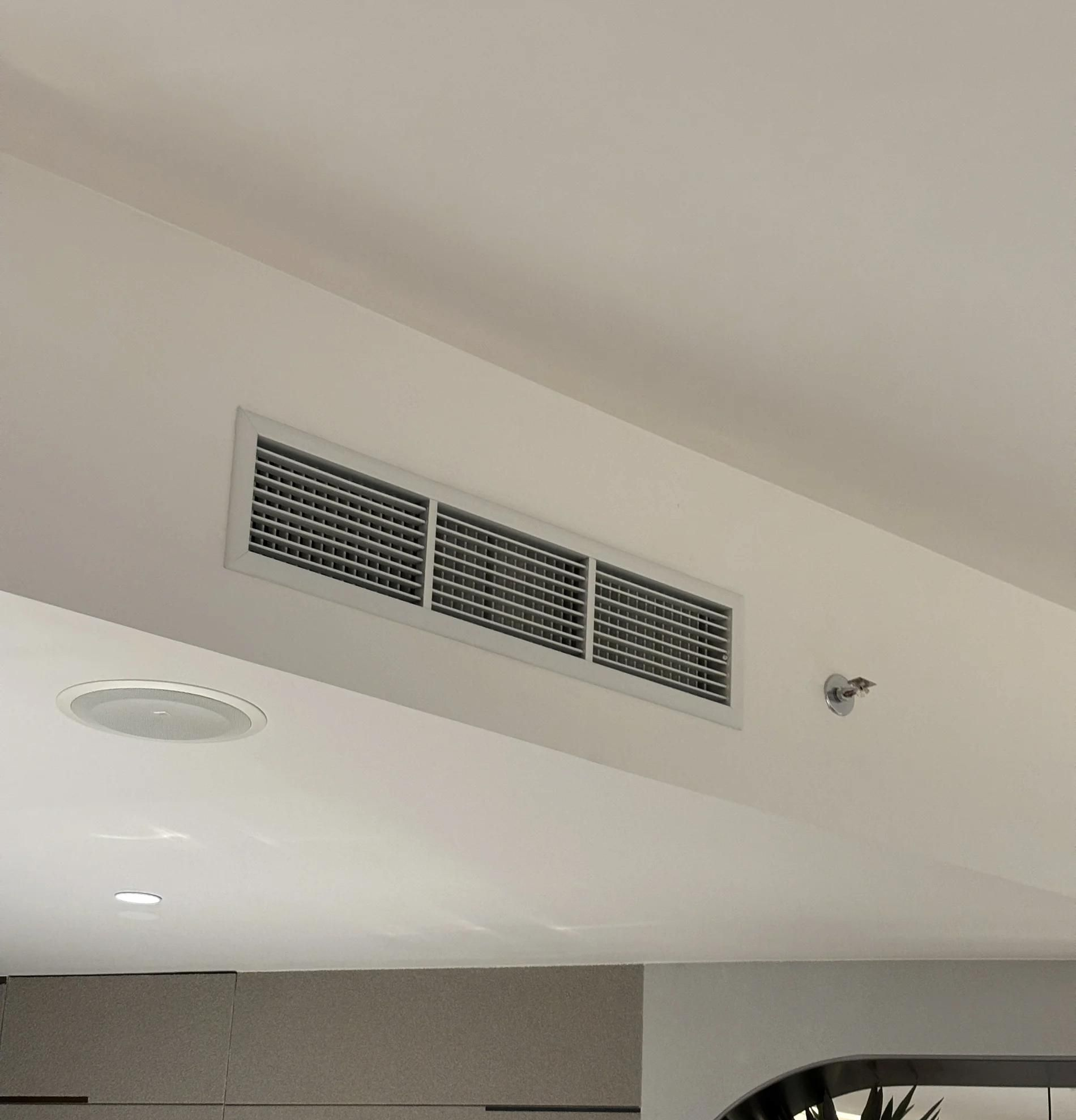
- Blocked or inadequate return air paths: air conditioning systems operate as a circuit — supply air is delivered and return air is drawn back to the unit to be reconditioned. When furniture, renovations or building design restrict the return air path, the system cannot move adequate air volume, reducing cooling capacity and straining the compressor
- Poor duct design: pressure imbalances cause some rooms to receive significantly more conditioned air than others. The thermostat reaches the set point at the sensor location and the system cycles off before the whole space is adequately conditioned
- Recirculation of stale, humid air: without fresh air exchange, humidity and CO₂ levels climb despite the system running at full capacity, because the system is conditioning a closed loop without dilution from outside air
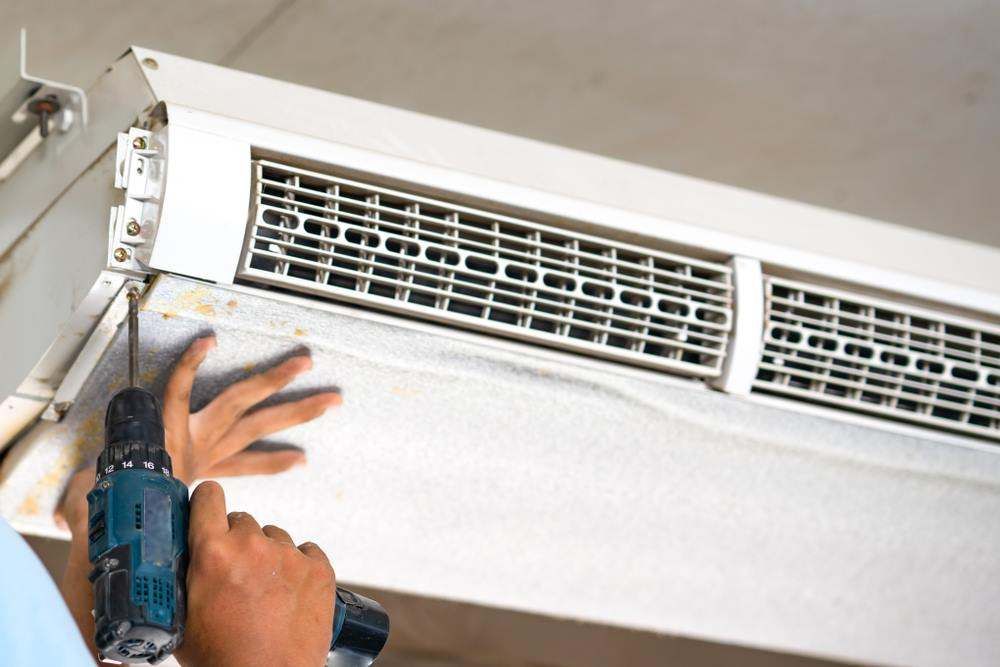
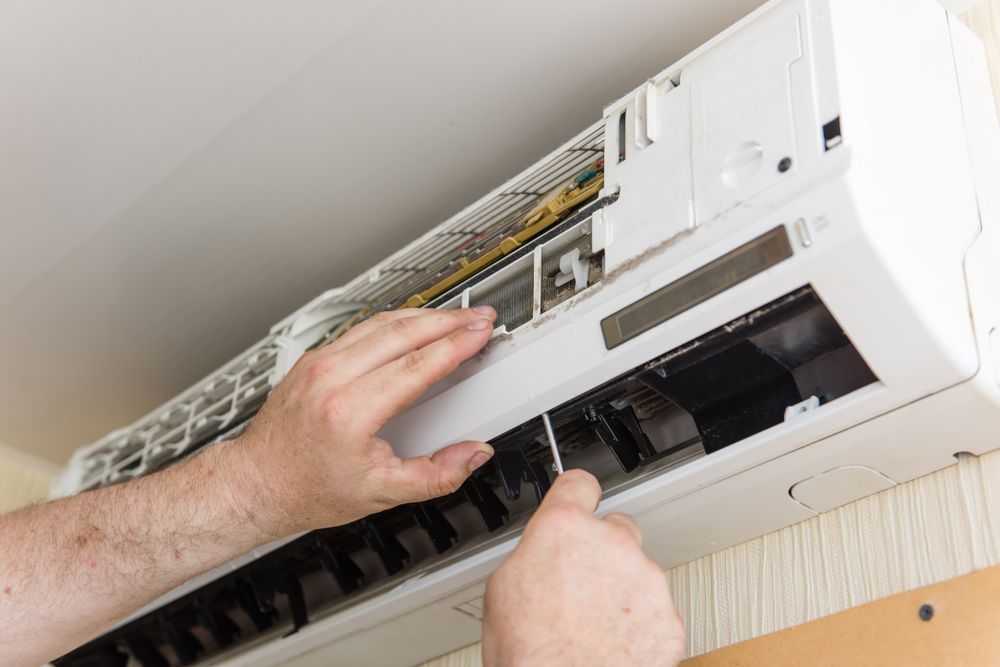
Regular air conditioning servicing — including checking ductwork, cleaning coil surfaces and verifying airflow rates — addresses the efficiency losses that ventilation problems create over time.
Strategies That Improve Ventilation Without Increasing Energy Use
Not every ventilation improvement requires additional equipment or energy. Some of the most effective approaches work with the building's existing characteristics:
- Cross-ventilation: openings on opposite sides of a building create a natural pressure difference that draws air through the space. In Queensland's climate, a home that can be opened to allow southeast trade winds through cools substantially through natural airflow alone during suitable weather, reducing the hours of mechanical cooling required
- Ceiling fans for stratification management: a ceiling fan running alongside air conditioning mixes air layers and eliminates the temperature gradient between floor and ceiling. The fan circulates conditioned air more evenly and allows the thermostat to be set a few degrees higher without any reduction in perceived comfort
- Exhaust ventilation in wet areas: a kitchen rangehood that vents to the outside removes a significant source of humidity and cooking heat before it can distribute through the rest of the building and require the air conditioning to compensate
- Controlled fresh air introduction: programmable exhaust fans or ventilation systems manage the balance between fresh air exchange and the energy cost of conditioning incoming outside air — avoiding the humidity and CO₂ accumulation of a fully recirculated system without the energy penalty of uncontrolled infiltration
The Sunshine Coast Context
The Sunshine Coast's subtropical climate means ventilation considerations are present year-round, but they manifest differently by season.
During summer, humidity management is the dominant challenge. The outside air is warm and saturated, and poorly ventilated spaces accumulate moisture faster than in drier climates. During winter and transitional seasons, the mild temperatures mean natural ventilation can carry most of the comfort load without mechanical assistance — provided the building allows it.
Homes and commercial buildings on the Sunshine Coast that feel persistently uncomfortable despite adequate air conditioning are most commonly experiencing one of three issues:
- Insufficient return air capacity limiting how much air the system can move
- Dirty or restricted coil surfaces reducing heat exchange efficiency
- Humidity accumulation from inadequate fresh air exchange
All three are diagnosable and addressable through professional air conditioning service and assessment.
When Ventilation Problems Need Professional Assessment
Some ventilation issues are visible and straightforward — a blocked grille, a disconnected duct, a return air path obstructed by a renovation. Others require diagnostic work to identify:
- Pressure imbalances across a duct system
- Coil fouling that has reduced heat transfer over time
- Airflow rates that have dropped below the system's design specification
A professional air conditioning service that includes airflow assessment, coil cleaning and duct inspection identifies and resolves these issues before they compound. For Sunshine Coast homes and commercial properties experiencing comfort issues that do not respond to thermostat adjustments, the cause is more often a ventilation or airflow problem than a fault with the equipment itself.
Book an Air Conditioning Service on the Sunshine Coast
If your space is not cooling the way it should despite a running system, the ventilation and airflow characteristics of the space are worth investigating before replacing equipment that may be performing exactly as well as the current installation allows.
Davies Air Conditioning provides air conditioning servicing and repairs across the Sunshine Coast, including airflow assessment, coil cleaning and duct inspection. If comfort issues are persisting in your home or commercial property despite adequate equipment, contact our team to arrange a service and diagnostic check.